
Using a Brand Sprint to Learn What Your Employees Value

1. Introduction
Savtec are a Swedish engineering business that design indoor spaces for commercial properties. They have 12 employees and work with a range of international clients. Their work also contributes to energy savings for their customers.
This project was worked on by Aisling O'Rourke, Ana Bugalete, Ellen Keith Shaw, Kim Poxon & Jakub Skworz.
1. Introduction
2. Opportunity
3. Approach
4. Results
5. Conclusions
6. Testimonial
1. Introduction
2. The Opportunity
3. Approach
4. Results
5. Conclusions
6. Testimonial
2. Opportunity
Savtec had the following goals in mind for this project:
- To expand their workforce which is predominantly Swedish and hire talented international engineers.
- They have built a company culture where the family narrative is at the heart of the way they work, and it’s something they want to maintain as they grow and scale.
3. Approach
The brand sprint framework is an ideal starting point for Savtec, as they are a business that have a specific area of their brand they want to address - growth while maintaining the company culture they’ve built.
3.1. Defining the Problem
Defining the problem was the focus of the first workshop. As mentioned above, Savtec knew what area of their brand they wanted to address, but we needed to explore this in more detail.
The collaborative approach adopted in this workshop ensured that we looked at their challenge from all angles. These included:
- What was working well already
- Where they are currently struggling
- Where they see potential
During this workshop, as brand strategists we focussed on assessing the above angles from the perspective of other stakeholders relevant to their business. These included:
- Potential employees
- Current employees
- Past clients
- Potential clients
After going wide to generate ideas, we then focussed on finding the common threads amongst these. This helped us to label insights and see new connections.
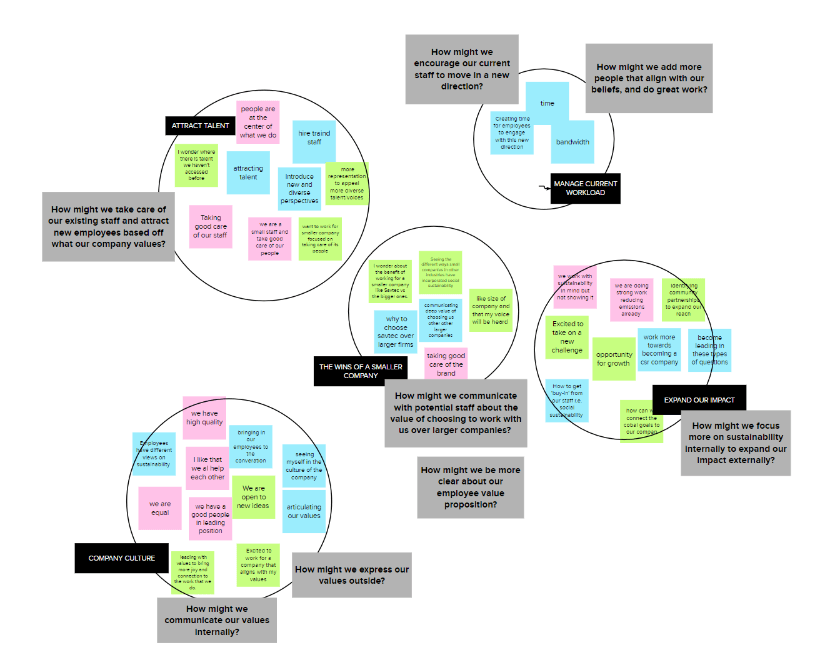
From these insights we then set about prioritising these based on what we could have a meaningful impact on within 2 weeks. An impact/effort map brought clarity on where we should focus.
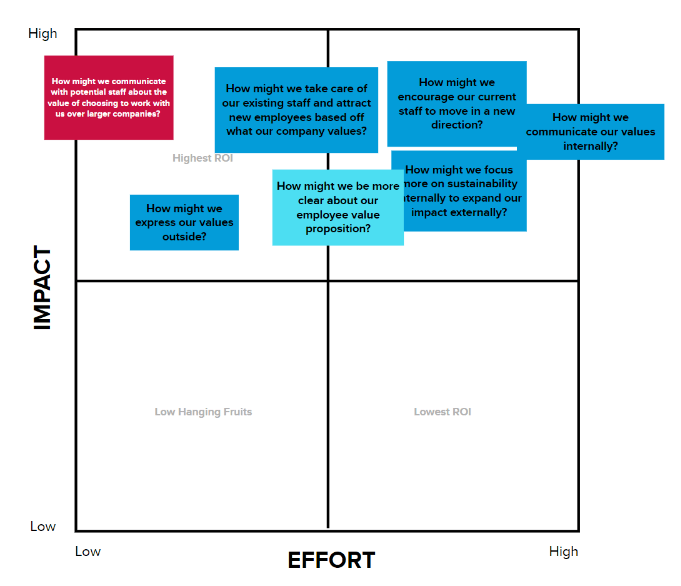
We framed the question we would be working on for the remainder of the sprint as the following:
How might we communicate with potential staff about the value of choosing to work with us over larger companies?
3.2. Solution Exploration
In workshop 2 we explored how we would approach the question we formed in workshop 1.
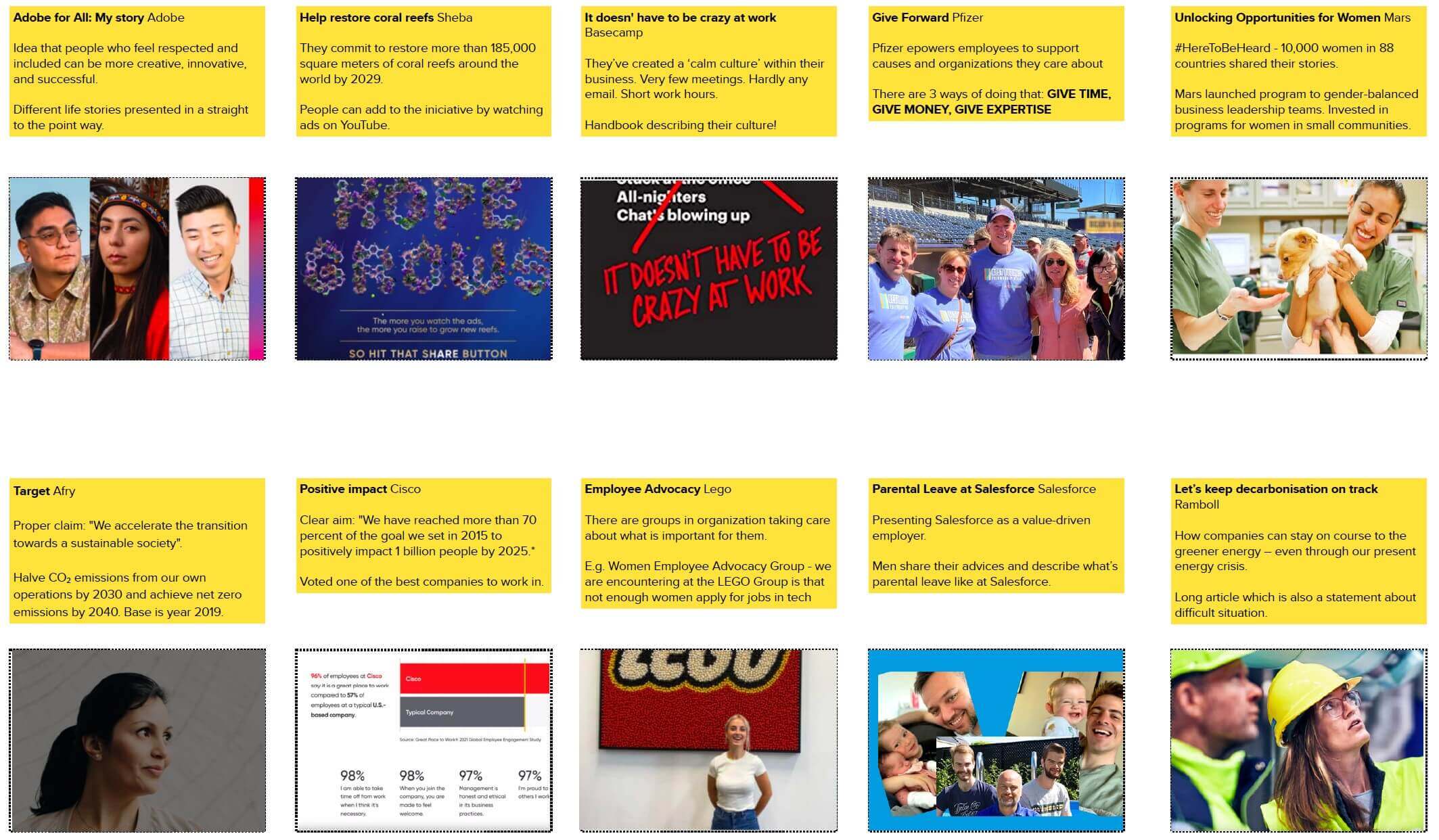
This was done using an exercise called “Lightning Demos” as an opportunity to highlight how other international companies use purpose, environmental commitments, and social sustainability as core part of their workplace culture.
Next we carried out an exercise called “Crazy 8”. The purpose of this activity was to get people thinking up a range of ideas quickly, but not going into any detail at this stage.
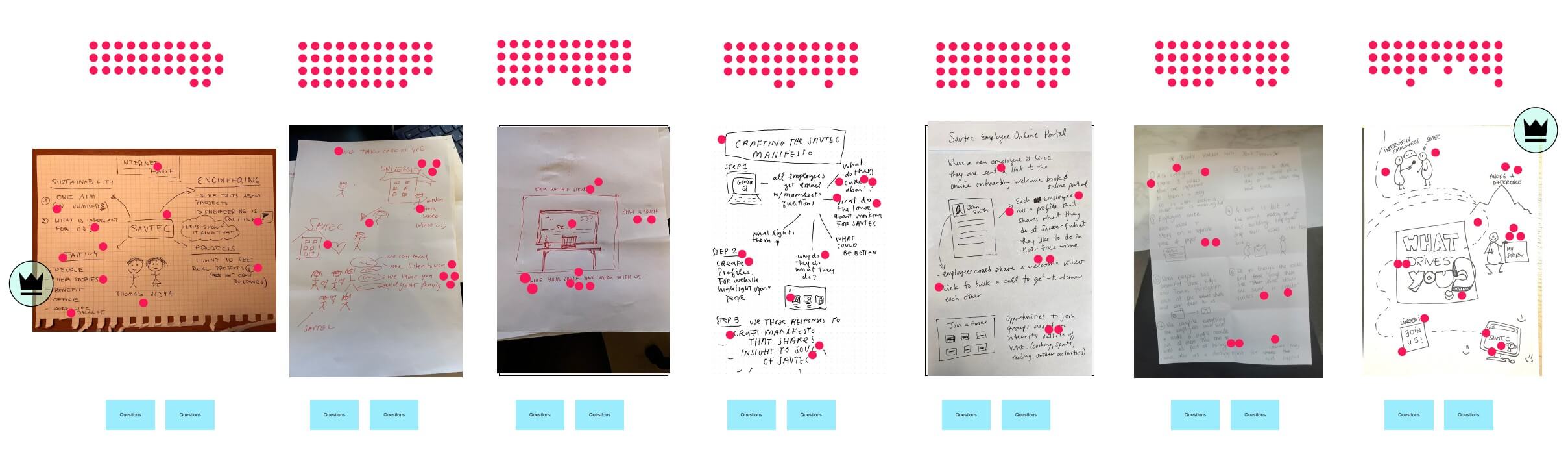
Following this, each participant on the call chose one of their ideas from “Crazy 8” and sketched this concept, focussing on how they would protype solving this problem.
Each person explained their concept to the group and we voted on the idea we would prototype.
Below are images of the sketches each participant created, and the heat mapping voting system we used to decide the winning sketch.
There were two winners, and we used these as the basis for the prototype we would develop.
3.3. Prototyping
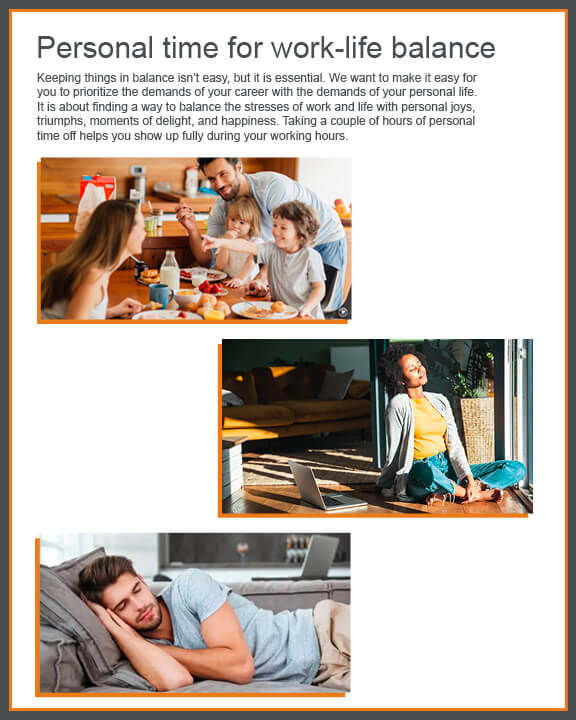
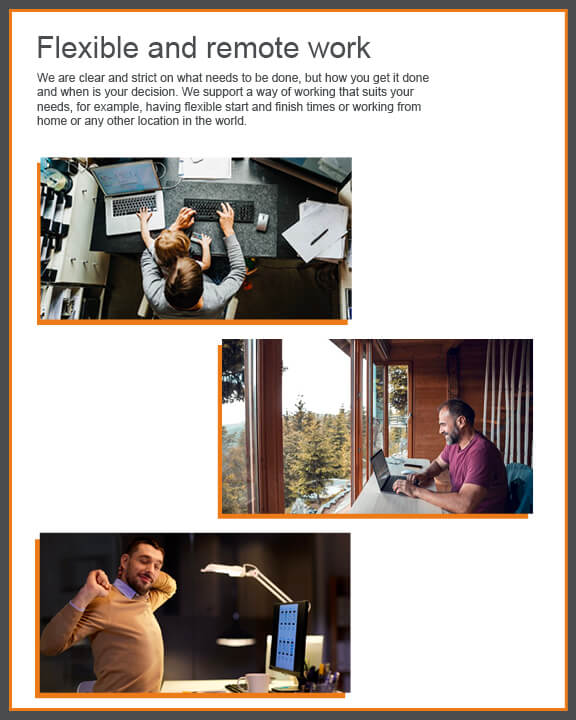
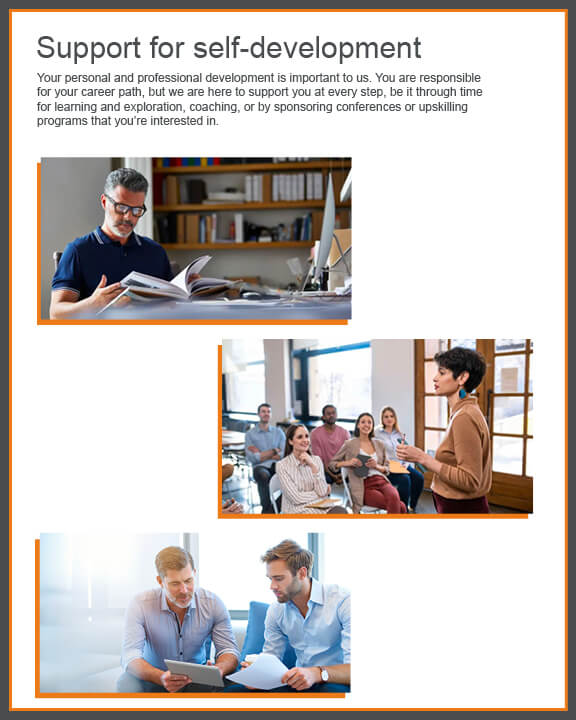
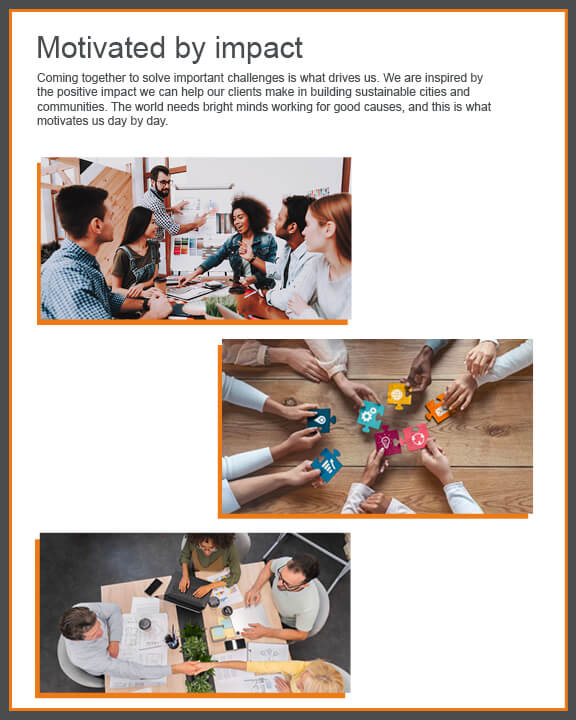
We built our prototype by developing 5 posters. Each of these posters represented different values that are important for people with their work
Poster 1
Poster 2
Poster 3
Poster 4
Poster 5
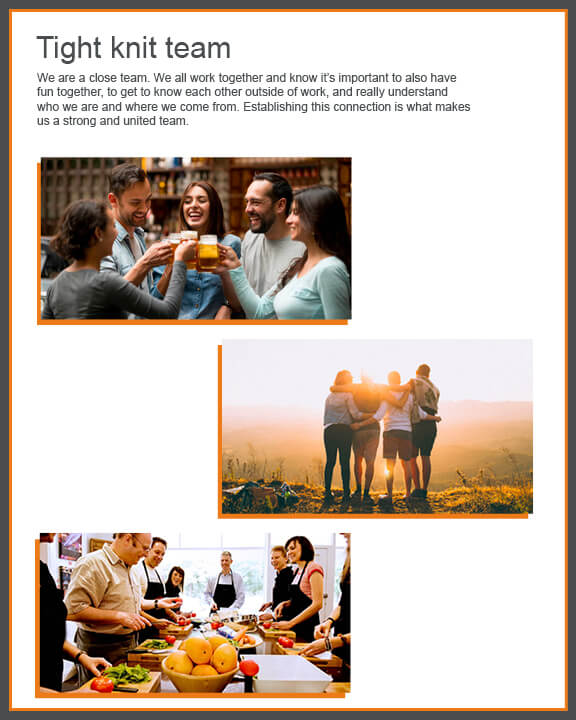
Finished Prototype
The protype we developed consisted of a two page website. Images of this can be seen below.
Screen 1
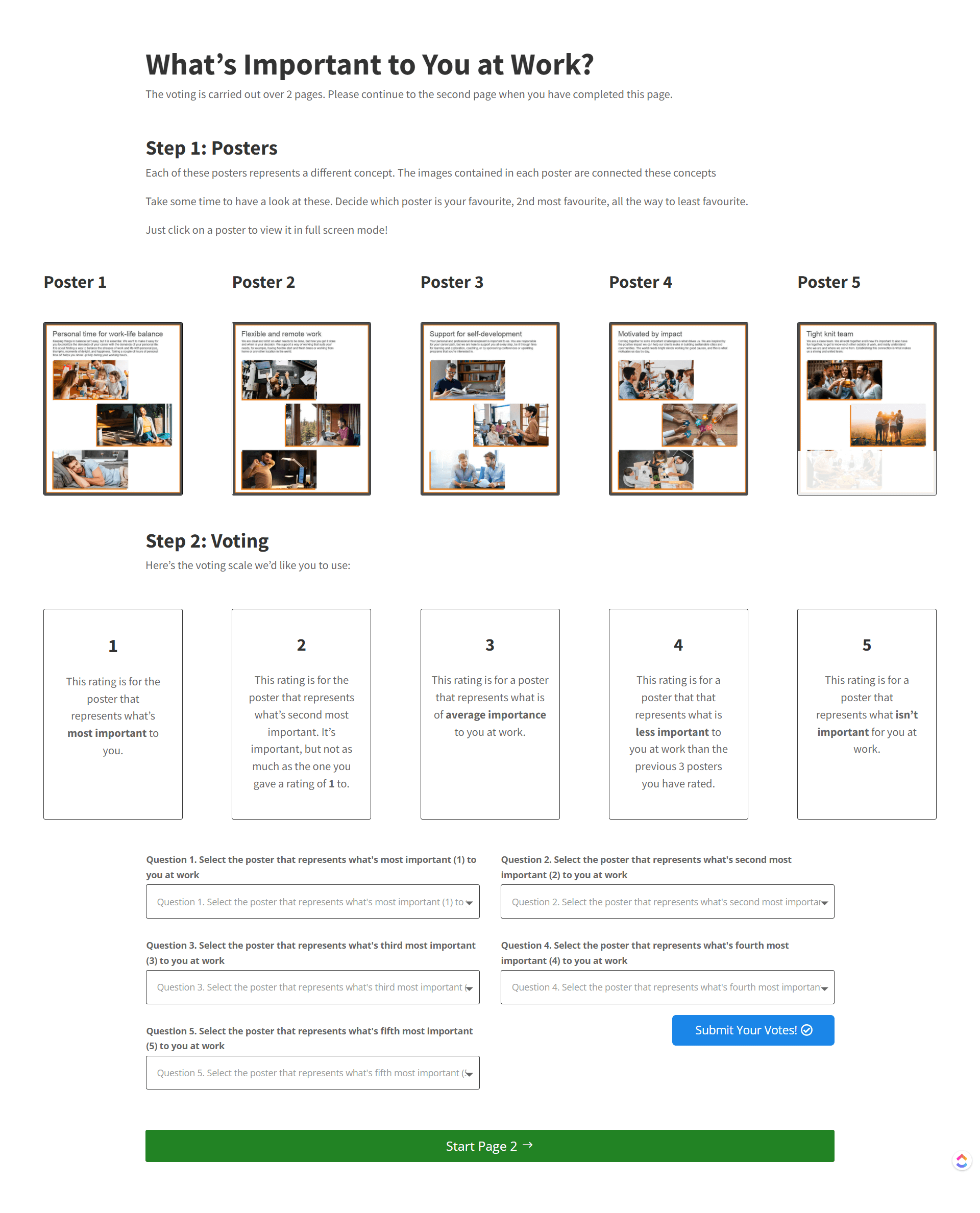
Screen 2
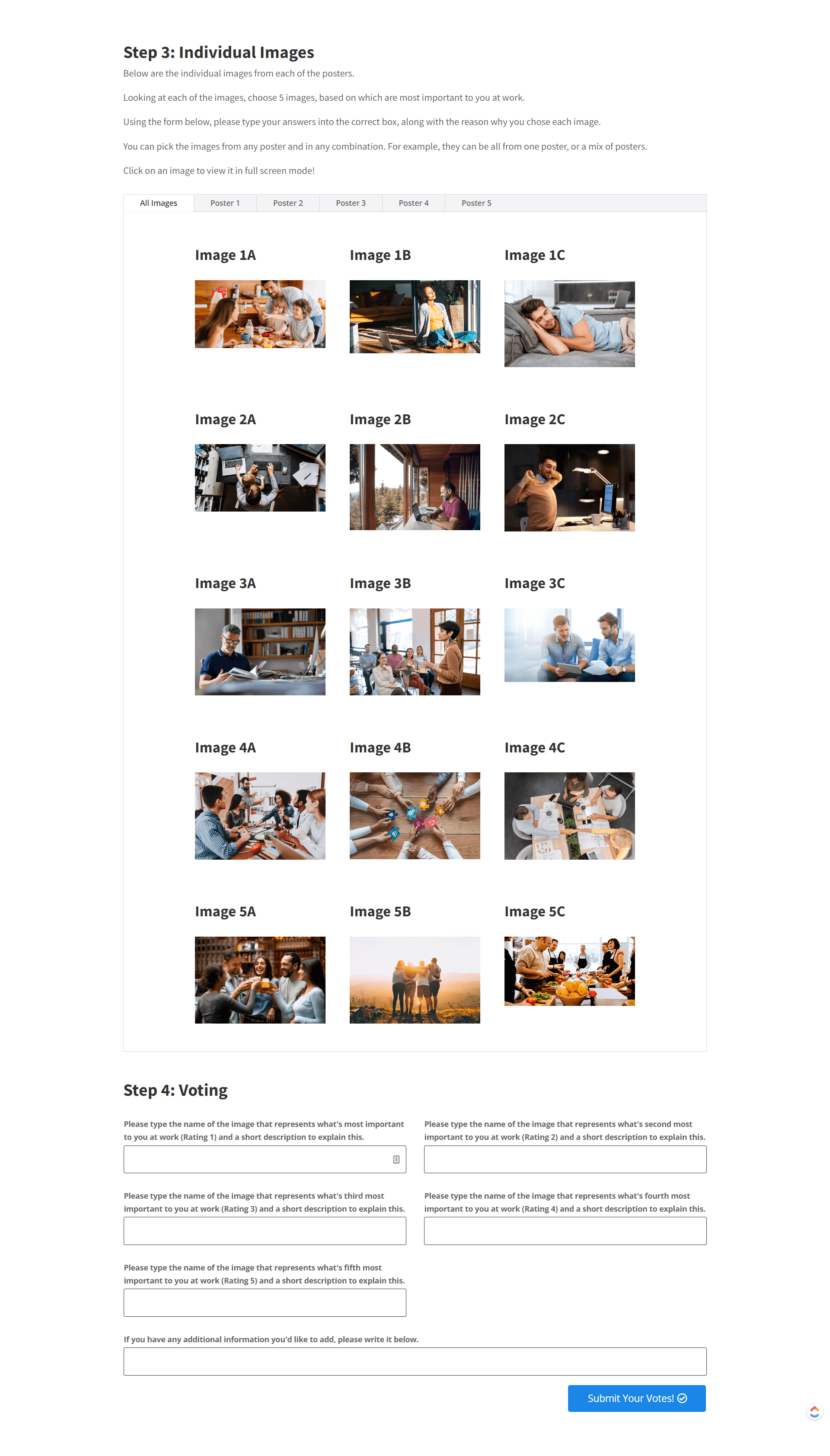
Voting Round 1
People were asked to rate in order of preference their favourite to least favourite poster.
Voting Round 2
People were asked to rate in order of preference their favourite 5 images (from each of the 5 posters)
Session Recordings
Sessions were also recorded. This served multiple purposes:
- To ensure that people weren’t simply clicking through and not considering their answers
- To get a sense of where people spent the most time deliberating on their answers
4. Results
The poster that represented what was most important to people at work was poster number 1 - personal time for work-like balance. 10 out of 12 participants put this poster in their top 3 votes.
The poster that was least important was number 5 - tight knit team.
For images, image 4A represented what was most important to people, while images 1a and 2b also tested well.
This highlighted that that personal time for work-life balance is important to people, as is collaborating with the team to achieve a mission-driven purpose.
Session Behaviour Observations
Most people made the decision of the top 2 posters and images that were most important first, while the final 3 took them longer to come to a decision.
5. Conclusions
- Get the prototype out to a wider audience. In particular, it would be useful to see what potential employees would find value in, to see how that overlaps or diverges with existing employees.
- Consider moving towards identifying a shared purpose with Savtec’s employees about the work they do together, rather than emphasizing the family narrative.
6. Testimonial
“Aisling and the team listened to our ideas and concerns and distilled them into clear and concise solutions that exceeded our expectations. We appreciated the care and attention to detail they put into every aspect of the brand sprint. We were particularly impressed with the prototype that was conducted, which revealed some interesting insights and challenged some of our assumptions about our business.
The outcome was an articulate and actionable roadmap that is a valuable asset for us as we think about how we want to continue to elevate our business.
We would highly recommend Aisling to anyone looking for a knowledgeable, experienced, and creative brand strategist.”

Founder & CEO, Savtec
Need anything else?
Just send us a message - we're here to help.